La Semana Santa Easter Processions in Spain
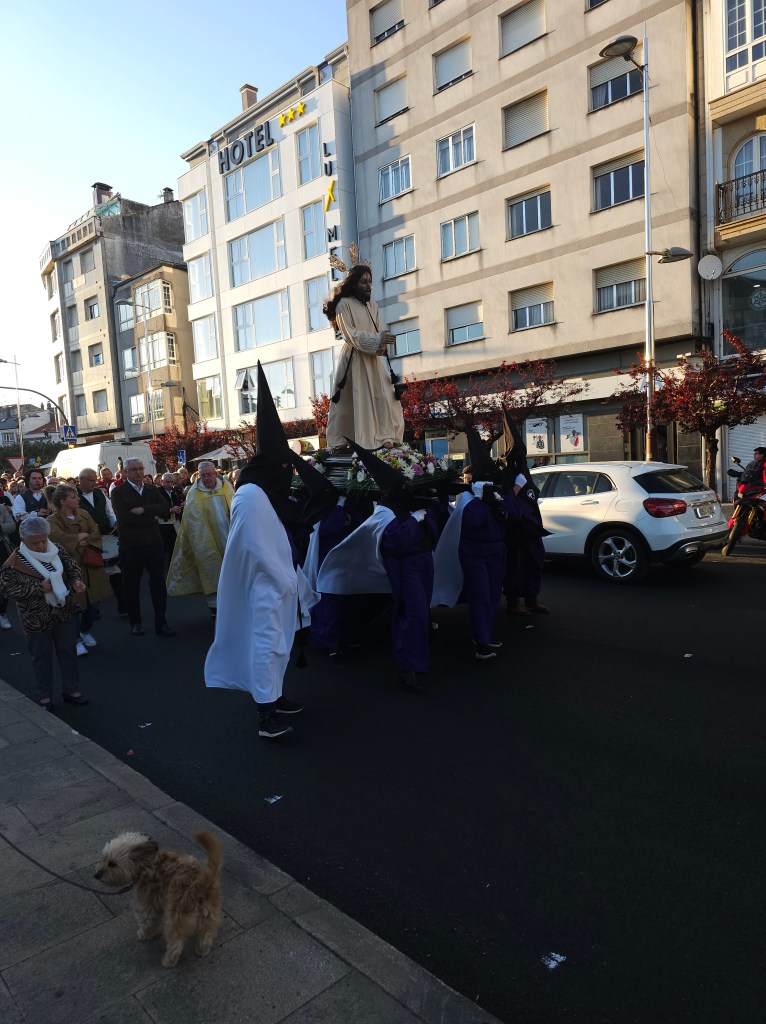
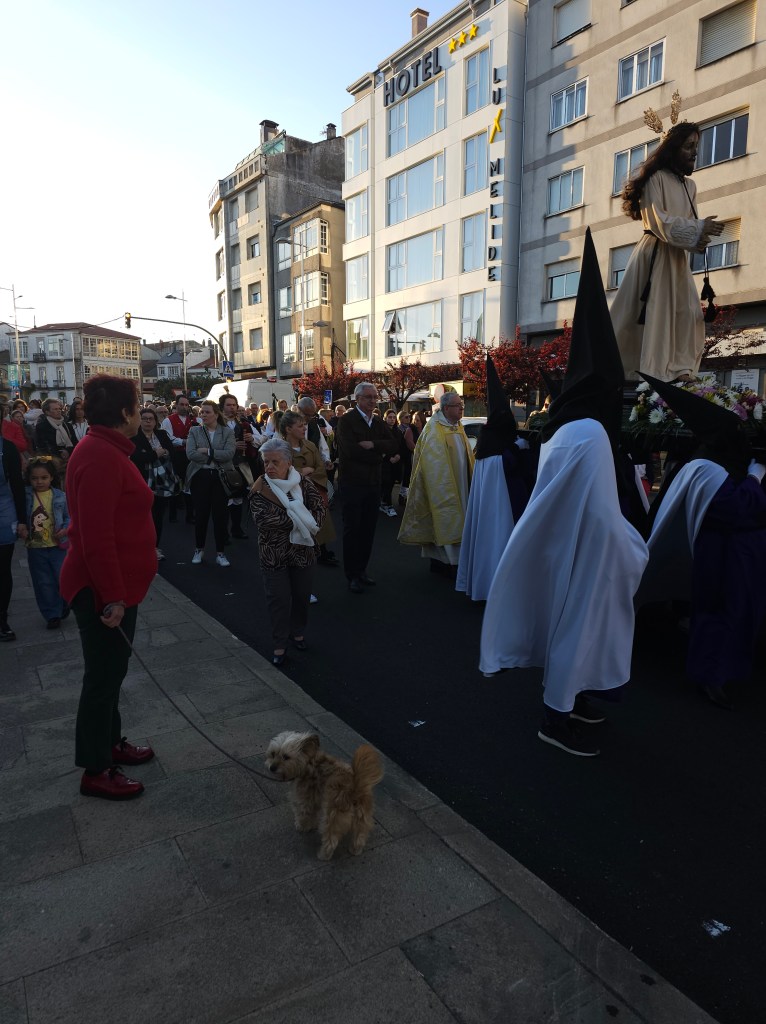
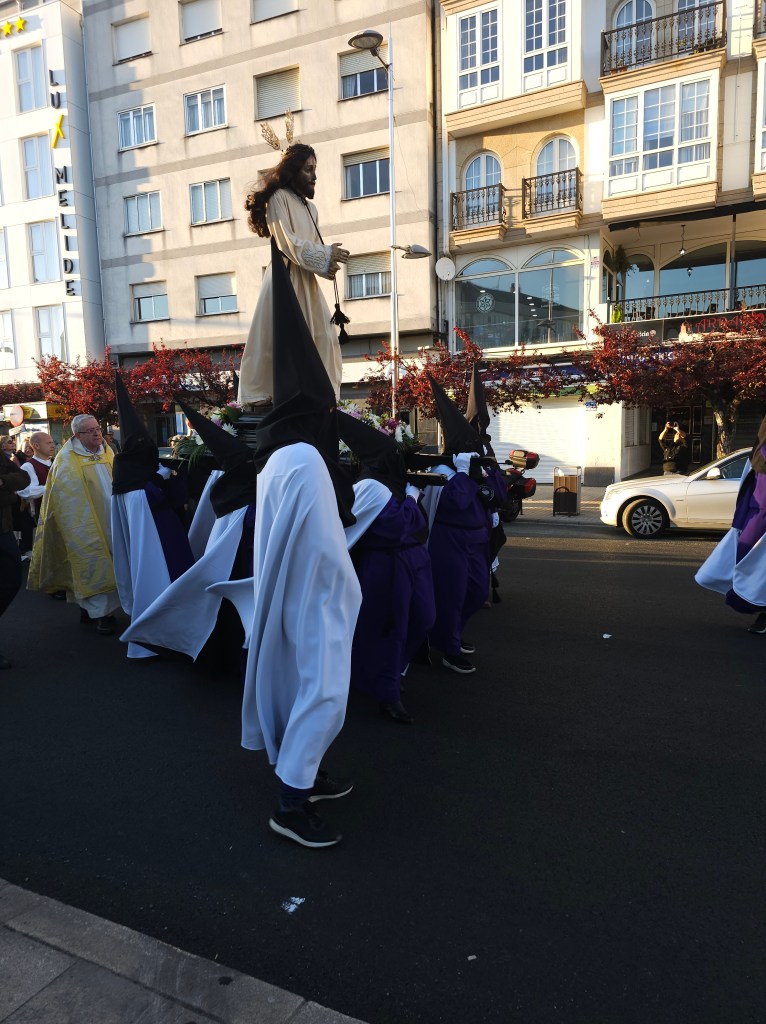
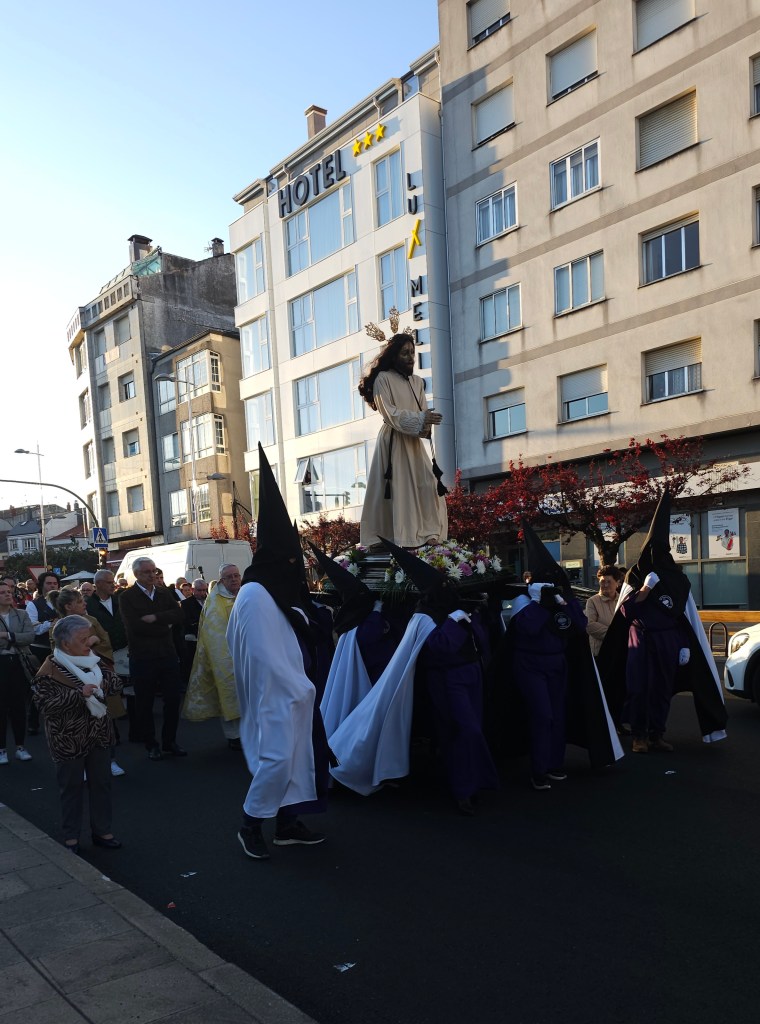
Easter Sunday in Spain is preceded by an entire week of celebrations, known as La Semana Santa (“Holy Week”). During the week, processions take place, beginning at churches. The highlight of the processions are the “Pasos”. These are usually large sculptures depicting scenes from the Bible, which are carried on the shoulders of people throughout the city/village for hours.
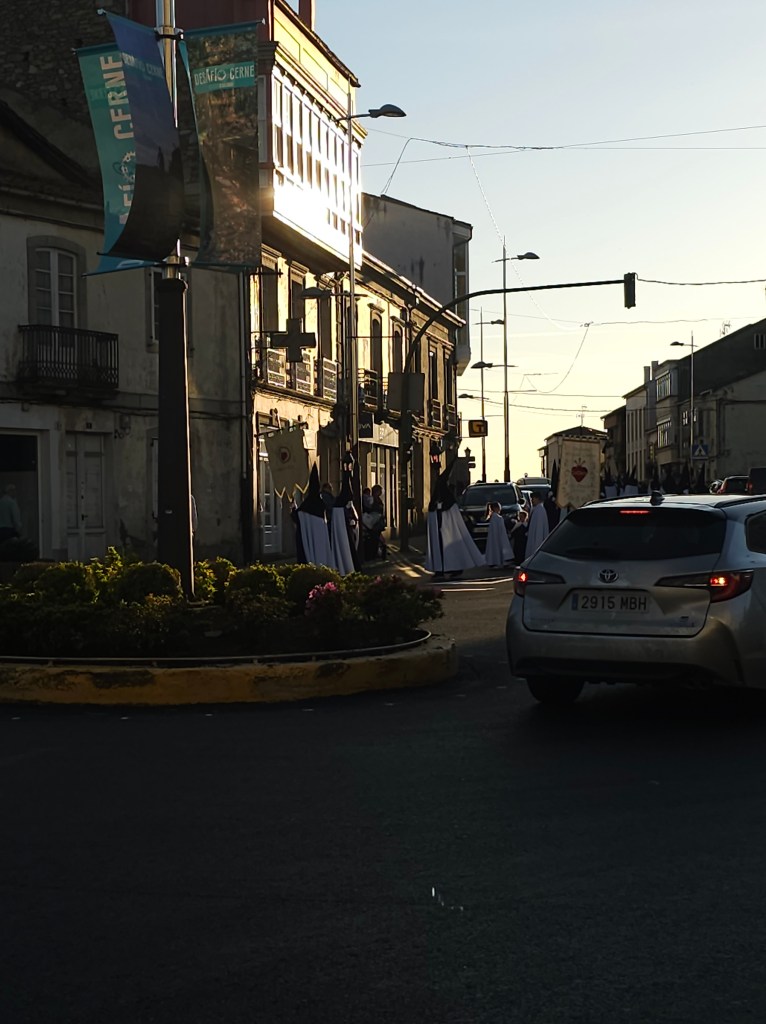
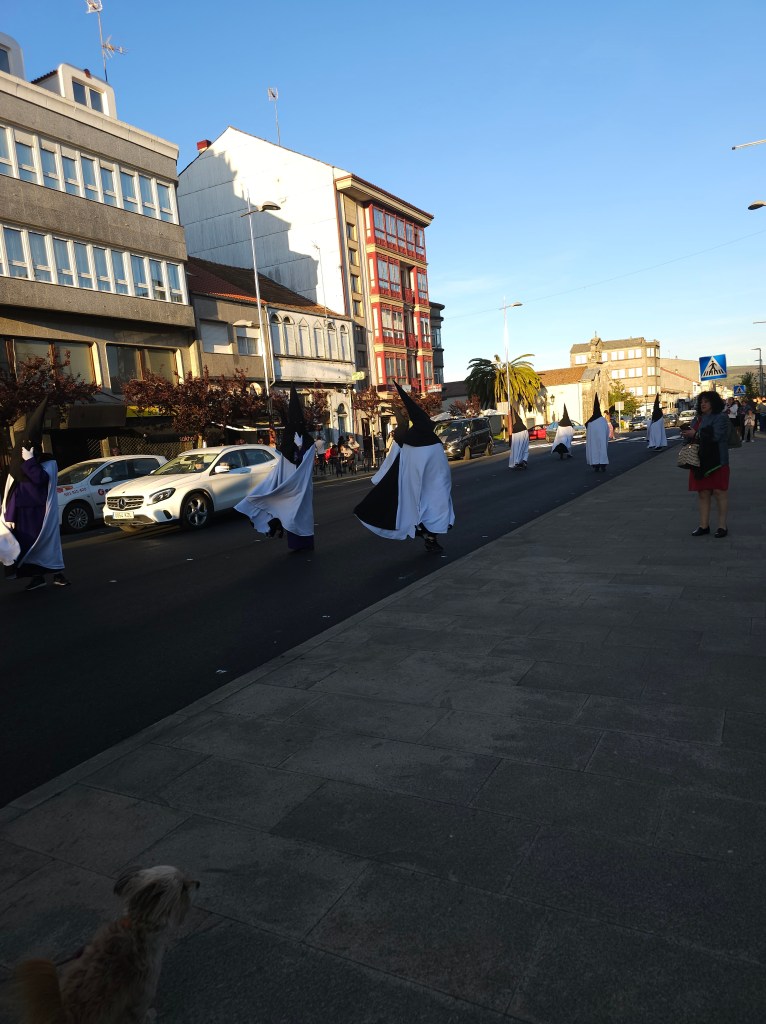
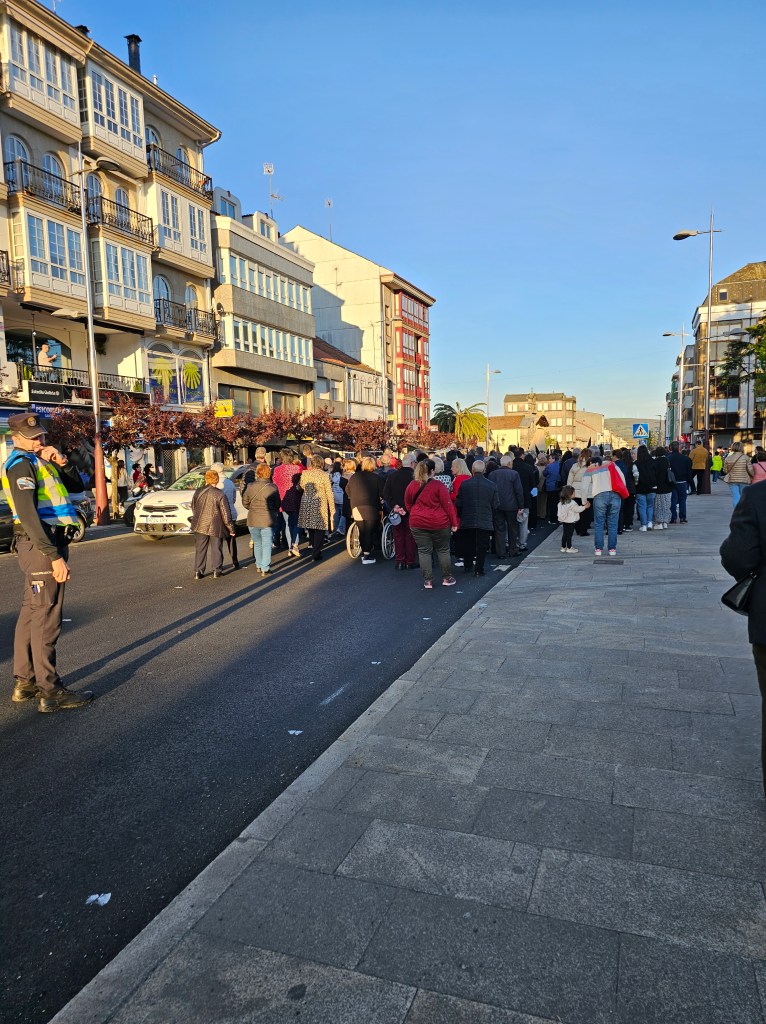
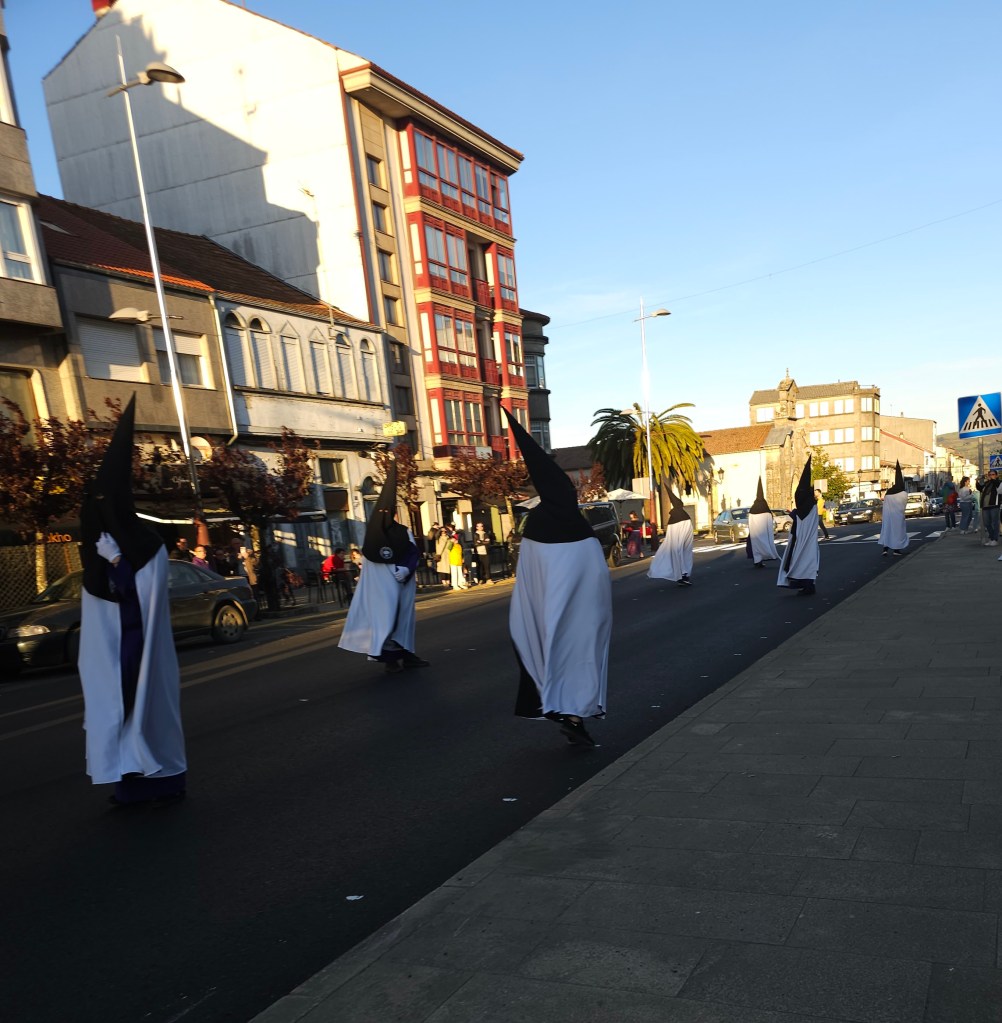
The processions are slow marches through a village or city starting at a church. Large bands follow many of the “Pasos”, playing traditional Easter music. Where we were in the town of Melide, the music was a mix of instruments including drums and bagpipes. The pasos are led by the Nazarenos, the people in the robes and coned hats.
The Nazarenos wear the pointed hats (known as capirotes) and robes. Nazarenos are part of the Catholic brotherhoods. Generally, each city has multiple brotherhoods, each with their own representation and different symbols and colour of robes. Often, these brotherhoods date back to the Middle Ages.
Traditionally, only men could be in the Catholic brotherhoods, but nowadays, women also join in. In Melide, there were children in costumes but without the coned hoods, thank goodness. Moreover, Nazarenos represent penance due to the historical significance.
Some historians believe that the Capirotes (the coned hoods) worn by the Nazarenos date back to the time of the Spanish Inquisition (1478–1834). Sinners had to wear a cone hat and walk through the streets as a form of public humiliation. The colour of the cone hat represented their type of punishment.
After the Spanish Inquisition disbanded (1834), people continued to use the cone to do penance to absolve them of their sins. The Catholic brotherhoods continued doing it. Over time, the hoods became longer so that people could penance anonymously without being publicly humiliated. How very humanitarian.
I have been told by a local that today, only Catholic brotherhoods wear the capirotes. While the costume still represents penitents, those wearing the costumes are not doing penance anymore. The costumes are now usually much more majestic than they once were, and the Catholic brotherhoods proudly lead the pasos, often carrying candles. In Melide, the costumes were quite plain, white robes over the top of purple and with black hoods.
It is fascinating learning about the local culture and traditions.
 Trischs Travels