This morning I headed out early before the sun was up. The sky had a pretty pre-dawn pink hue to it and I realised I would be in the shade for some time as the sunrise would be behind the mountains.
My plan was to get the bus to Vigo and walk the last 13 klms to Redondela where I had accommodation booked for the night. As we all know ‘the best laid plans’ etc.
I left early to give myself plenty of time to get to the bus stop and was still a little distance away when along came a bus. I started to run when a man across the road called out ‘not to rush’. I thought that meant the bus would stay at the stop until it was the correct time, so I immediately stopped running. Wrong move, as I watched the bus pull away. The Rome2Rio app told me there was not another bus due for over 2 hours.
After getting such an early start and still being by the coast, I was content to set off following the yellow arrows once again.

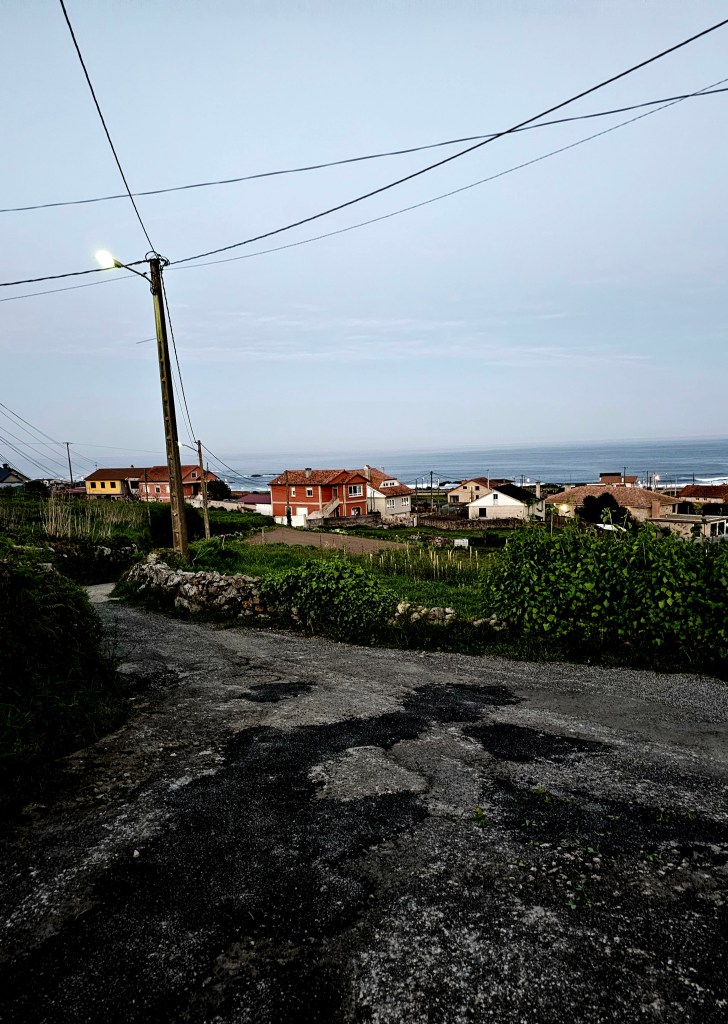
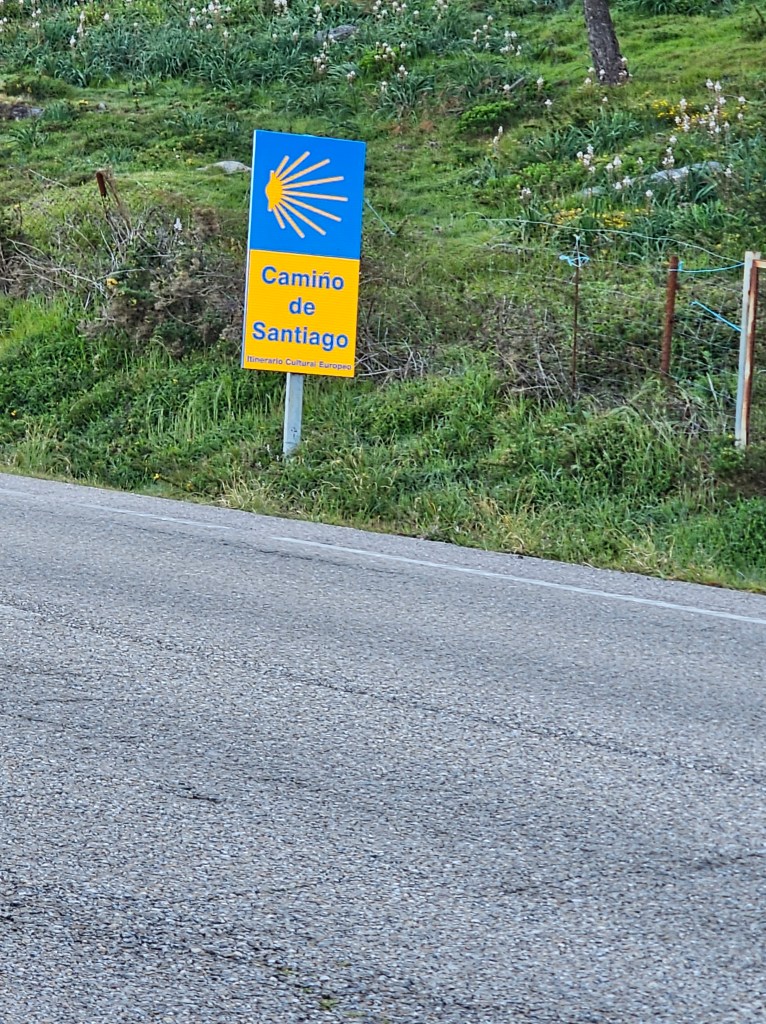
Almost immediately the path split off from the shared bike/walking yellow path that runs along the main road. I opted to take the walking track. I had ventured about a kilometre to where the track goes uphill to meet the shared path again, when almost to the top, the bus I thought I had missed, sails past me. Oh well, it was a beautiful day for a walk. Though the next time the route split, I opted to stay on the shared path rather than the ‘goat track’.


There was nothing open for coffee, so I trudged on to As Marina where the guide said I could get food. I was too early and nothing was open. In my eagerness to find substance I completely missed the warning that the route splits just before As Marinas in favour of a hiking trail that is shorter than the coastal route and that the arrows I have come to rely on would be scarce. Bugger. I tossed up if I should backtrack to find the shorter route, but the allure of the Atlantic Ocean was too much, and I continued onward to Baiona, keeping the coastline close to my left. The day was starting to awake while I watched some fishermen. Giant waves crashed against the rocks they were fishing from.
I am amazed at the wildflowers growing beside the ocean. They are abundant along the sides of the roads and in the paddocks, which I expected as it is spring here now. It is the varieties that grow so close to the salt water that surprises me.


Stopping every now and then to watch the ocean, the crystal clear aqua coloured water and the crashing waves made it an easy walk and time passed quickly.


Along the way, I passed cafes that had not reopened since COVID, and I am reminded of the impact the lack of people walking the Camio would have had on many of the little villages along the route.

The sun finally came up from behind the mountain and it soon warmed up. I started what is jokingly known as the Camino strip, removing layers of clothing under the 20 C temperature that feels more like 30 C.

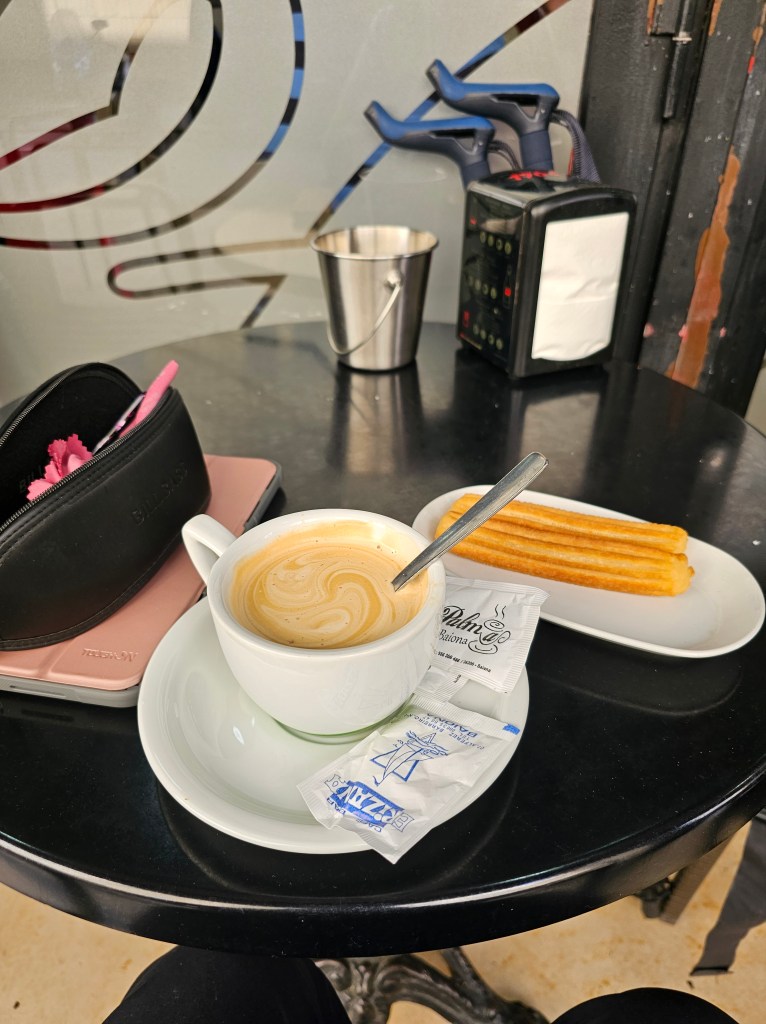
Arriving in Baiona, I found a cafe for breakfast and decided to have a look around while I pondered my next move. Walking along the shoreline, I came across the Monterrey Castle, a 12th century fortress that wasn’t completed until the 16th century. Initially, the castle was a strategic point for the defence of the maritime territory of the Rias Bajas.
The Catholic Monarches later transformed the castle into a town where over 200 families lived within the walls. It has had many iterations over the centuries, and since 1966, it has housed a National Parador, which is a Spanish public hotel chain. It is classified as an ‘Asset of Cultural Interest’, which I expect is similar status as Australia’s National Trust properties.
Its other claim to fame is that on March 1st, 1493, Martin Alonso Pinzon, a Spanish navigator and explorer, along with Christopher Columbus, returned here after his trip to America, making this town the first in Europe to hear the news of the discovery of the New World.
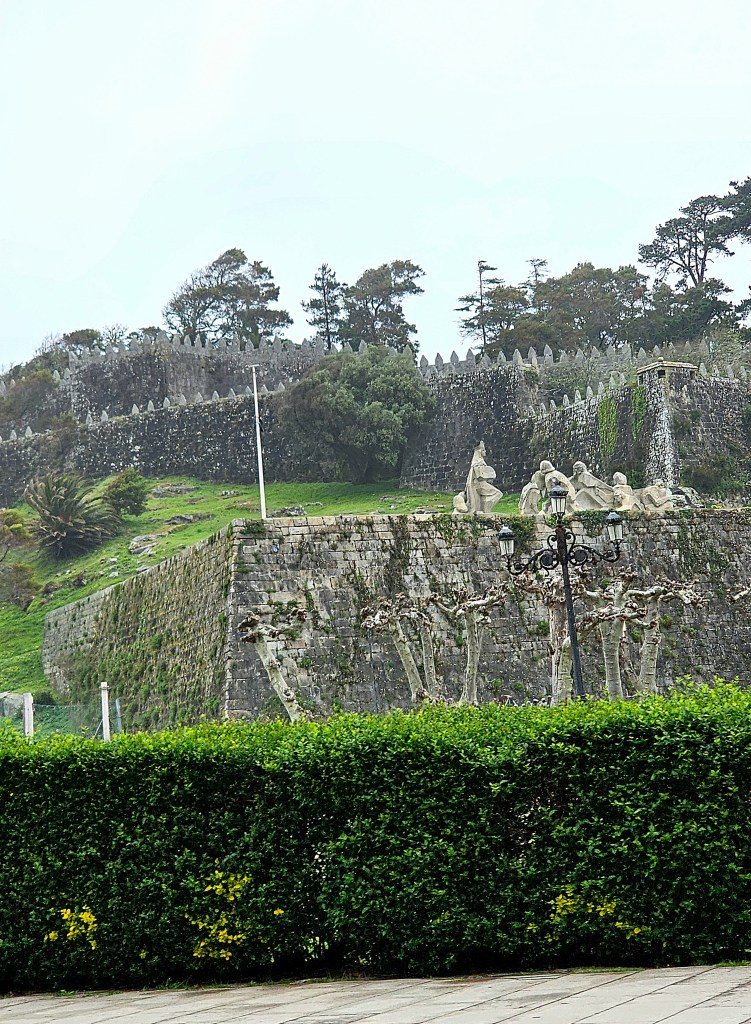

Biaona is a pretty seaside town that has retained some of its old-world charm, so I took my time looking around.
 Trischs Travels